
Federal Law Changed. South Carolina Didn’t. A Senator Wants to Know Why.
South Carolina patients are still waiting on a door that, on paper, opened months ago.
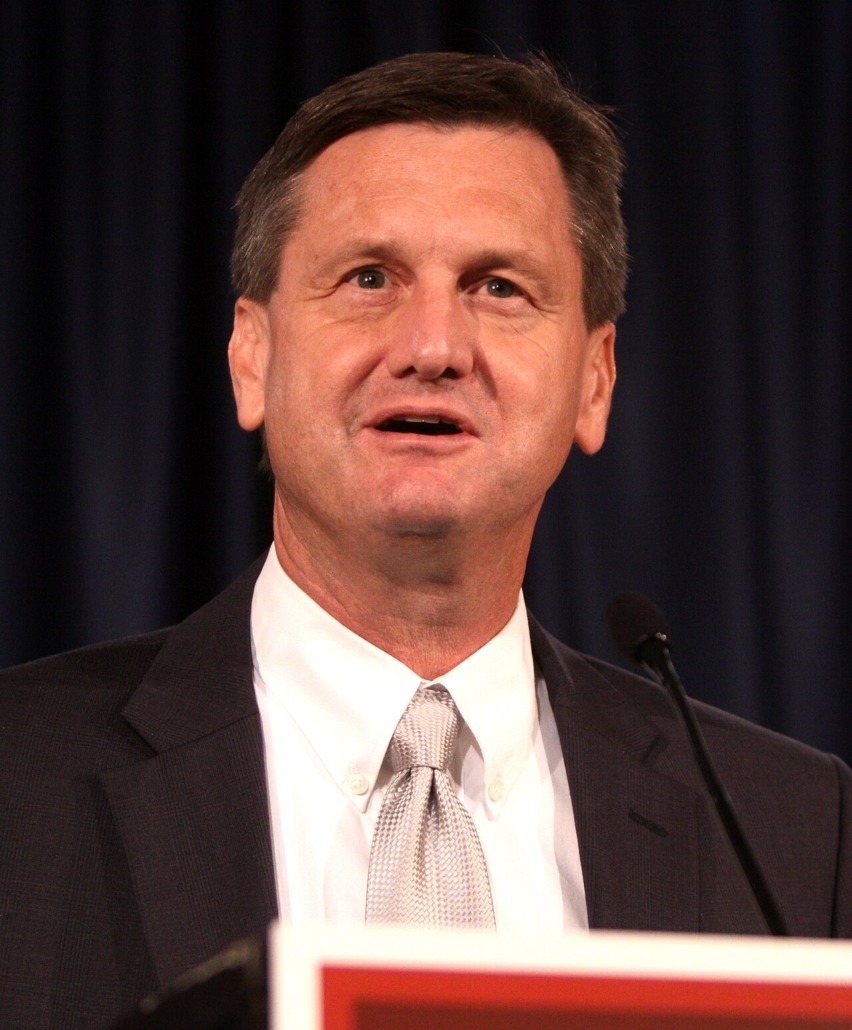
State Sen. Tom Davis, a Republican who has pushed medical cannabis legislation for years, has formally told the South Carolina Department of Public Health that the agency is out of compliance with two state laws. His case is simple to follow, and that is what makes it hard to shrug off. Federal law changed. A state law says South Carolina has to follow that change within 30 days. And by Davis’s count, that clock ran out on May 28, 2026, nearly six months ago.
The 30-day rule Davis is pointing to
In a two-page letter dated November 19, 2026, Davis wrote to Dr. Brannon Traxler, the acting director of the Department of Public Health, known as DPH.
The first law he cited is South Carolina Code Section 44-53-160(C). As Davis reads it, when a substance is added, deleted, or rescheduled under federal law, state officials have 30 days to make the same change in the state schedule, in substance identical to the federal order, unless the General Assembly directs otherwise.
The trigger, in his telling, was the federal move on April 23, 2026, to move marijuana from Schedule I to Schedule III, with the order published in the Federal Register on April 28. Reporting on the letter specifies that the federal move covered FDA-approved marijuana products and marijuana covered by qualifying state medical marijuana licenses. Count 30 days from that federal action and Davis lands on May 28, 2026. That date came and went with no state rescheduling order.
Davis also made a fairness point that is likely to land with readers who do not follow drug scheduling for a living. He noted that on July 28, Traxler signed an order adopting the federal Schedule I classification for hexahydrocannabinol, or HHC, under the same kind of federal trigger. His argument, in plain terms, is that the agency cannot use the rule when a federal move tightens control and then sit on the rule when a federal move loosens it.
Photo: Pavel Sevela / Wikimedia Commons
The second law is from 1980, and it never really got started
The other law Davis cited is older than most of the patients who might use it. The South Carolina Controlled Substances Therapeutic Research Act of 1980 set up a program to provide marijuana to qualifying cancer and glaucoma patients.
Under that act, DPH is responsible for appointing a Patient Qualification Review Advisory Board, setting up procedures to certify eligible patients, and obtaining marijuana through federally compliant channels. According to Davis, the department has never appointed the advisory board the act calls for and never set up a process to certify patients. The program has sat on the books for 46 years without being fully put into practice.
His argument for why now is straightforward. While marijuana sat in federal Schedule I, the state could point to federal law as the blocker. After the move to Schedule III, he says, that obstacle is gone. He also argued that a lack of funding does not excuse continued inaction, citing a 2014 South Carolina Supreme Court ruling in Amisub of South Carolina, Inc. v. South Carolina Department of Health and Environmental Control.
What Davis is actually asking for
Davis is not asking DPH to invent a new program out of thin air. He is asking it to do three concrete things:
- Issue a rescheduling order that matches the federal order.
- Start the therapeutic research program, starting with appointing the advisory board and adopting procedures to certify patients.
- Answer his written questions within 30 days.
He also copied Attorney General Alan Wilson on the letter and asked for a formal legal opinion on the agency’s obligations. That matters, because an opinion from the attorney general would either back Davis’s reading of the law or give the agency legal cover for its slower pace.

Photo: Pixabay / Pexels
DPH has promised an answer
This is not a letter that disappeared into a drawer. Traxler replied by email, in a message shared with Marijuana Moment, thanking Davis and confirming the timeline.
“We will respond within thirty days per your request,” Traxler wrote. “In the interim, please don’t hesitate to reach out if I can help with anything else.”
Thirty days from the November 19 letter lands on Saturday, December 19, 2026. Davis told Marijuana Moment he appreciates the pledge and will take Traxler at her word.
“Over the next few weeks I want to see the Department do what state law already requires: issue the rescheduling order, appoint the advisory board and get the therapeutic research program running,” he said.
And if the agency route stalls, the bill comes back
Davis is not putting all of his weight on one letter. He told Marijuana Moment this week that he will prefile his medical cannabis bill again in the 2027 legislative session.
That history matters for context. Versions of his medical cannabis measure passed the state Senate in 2022 and 2024, then stalled in the House. A new version filed for the 2025 session did not advance. So the 2027 refiling is not a new idea. It is the latest round of a fight he has been in for years, now running alongside a separate legal argument that the state may not need a new law at all, because two old ones already point in that direction.
What to watch next
Three dates and decisions will tell you where this goes:
- The written response DPH promised within 30 days of the November 19 letter, landing on December 19, 2026.
- Whether Attorney General Alan Wilson issues the formal opinion Davis requested.
- The 2027 session, when Davis says he will prefile his medical cannabis bill again.
None of that, on its own, opens a dispensary or puts medicine in a patient’s hands tomorrow. South Carolina still has no operating general medical marijuana program. What Davis has done is change the question. It is no longer only whether lawmakers want medical cannabis in South Carolina. It is whether a state agency followed a deadline that was already written into state law.
For patients watching from home, that distinction is not academic. It is the difference between waiting on a debate and waiting on paperwork that was supposed to be done in May.
Sources: Marijuana Moment reporting on the Davis letter and the DPH response (November 2026); The Marijuana Herald and MMJ Daily coverage of the November 19, 2026 letter; South Carolina Code Section 44-53-160(C) as cited in that reporting.
Editorial disclaimer: This post reports on public statements, legislation, and agency actions concerning cannabis policy. It is journalism, not legal or medical advice, and it does not endorse or sell any cannabis product. Laws and agency positions can change. Readers should check current South Carolina law and official state sources before acting.
#MedicalMarijuana #SouthCarolina #CannabisNews


Leave a Reply
Want to join the discussion?Feel free to contribute!