
Black Wall Street: What Tulsa Built, What Was Taken — and Where Black Wealth Lives Now
In 1921, the most prosperous Black community in America stood in Tulsa, Oklahoma. It had banks. It had a hospital. It had a hotel so grand it was the largest Black-owned hotel in the country. And in less than twenty-four hours, a mob burned it to the ground.
This is Greenwood, the original Black Wall Street. This is what they built, what was taken, and where that same blueprint lives today: in Atlanta, Georgia, and in Prince George’s County, Maryland. Stay with the story to the end, because the ending is not the fire. The ending is the rebuild.
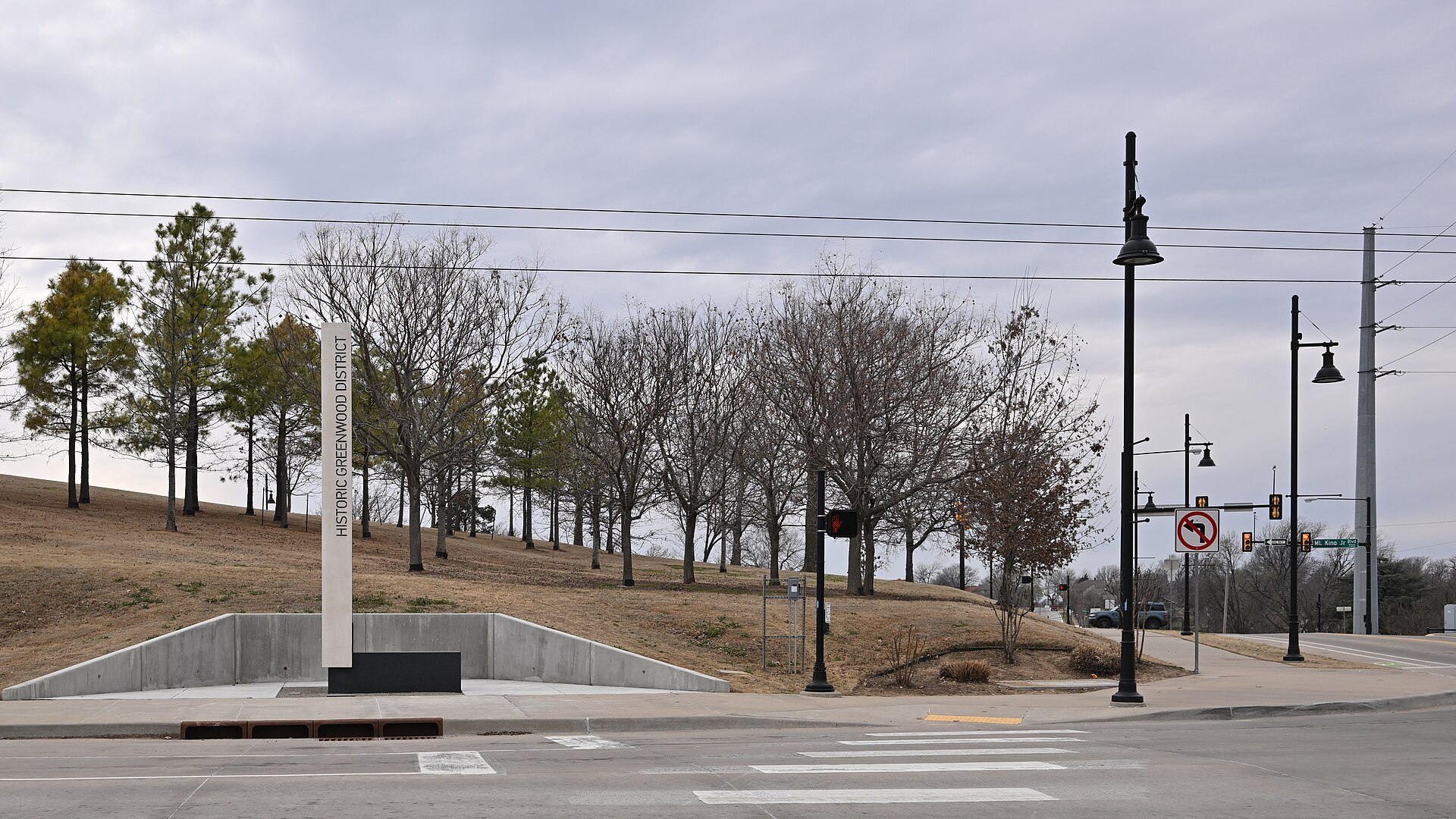
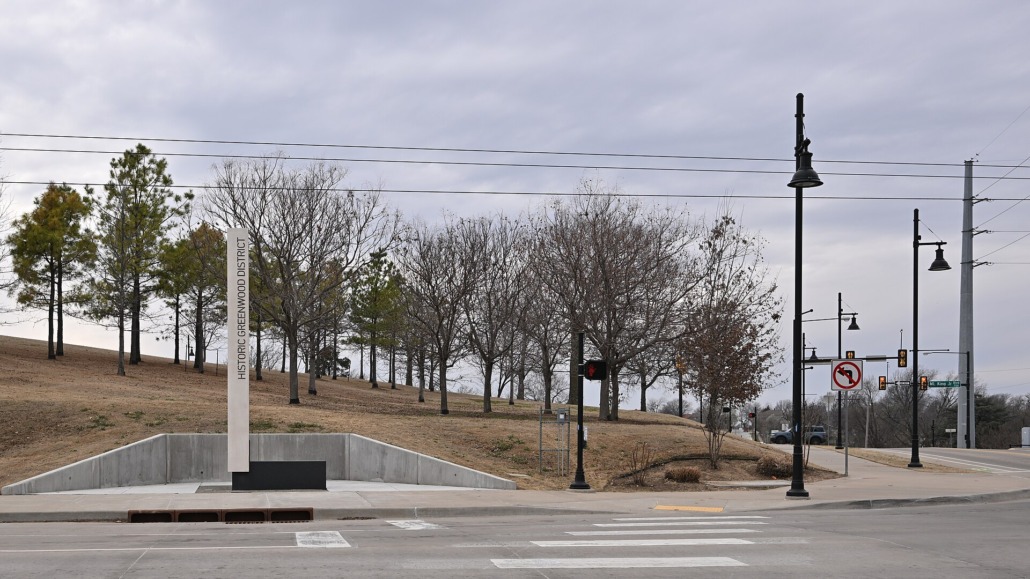
Photo: G. Edward Johnson / Wikimedia Commons (CC BY 4.0)
PART 1: THE BUILD
It starts with land. In 1906, O.W. Gurley, a wealthy Black landowner from Arkansas, moved to Tulsa and bought forty acres north of the Frisco railroad tracks, land he sold only to Black buyers. His rooming house became Greenwood’s first business. Around that ground, a community engineered its own economy: segregation meant Black dollars had few other places to go, so the dollars stayed in Greenwood, and stayed, and multiplied.
By 1921 the district held 191 businesses in the city directory alone: doctors’ and lawyers’ offices, grocers, theaters, hotels, plus a hospital, a library, and schools, with local estimates running to several hundred more firms too small for the directory. Two newspapers, the Tulsa Star and the Oklahoma Sun, printed its news. J.B. Stradford, born in 1861 to an enslaved man who escaped to Canada, opened the Stradford Hotel in 1918: fifty-four rooms with a dining room and pool hall, the largest Black-owned hotel in the United States. Booker T. Washington is said to have dubbed Greenwood Avenue the “Negro Wall Street of America”, the name the world shortened to Black Wall Street.
Understand what that means. Within living memory of slavery, a Black community built a self-contained economy strong enough that a dollar could circulate inside it for weeks before it left. That is not just history. That is a blueprint.
PART 2: THE FIRE
On May 30, 1921, Dick Rowland, a nineteen-year-old Black shoeshiner, rode an elevator operated by Sarah Page, a white teenager. What happened in that elevator has never been established. The most common account is that he stepped on her foot and she screamed. Rowland was arrested the next morning. A Tulsa newspaper inflamed the story, and a white crowd gathered at the courthouse, threatening to lynch him.
That night, about twenty-five armed Black men, many of them veterans who had just fought for this country in World War I, went to the courthouse and offered to help the sheriff protect Rowland. Turned away, they left. Around 10 p.m. a second, larger group returned. As they were leaving, a white man tried to take a Black veteran’s gun. A shot was fired. Then gunfire.
Through the night of May 31 and into June 1, the mob looted and burned Greenwood, block after block, home after home. When it ended, some thirty-five city blocks lay in ruins. The Red Cross estimated 1,256 houses burned and 215 more looted. The state officially counted 36 dead; the 2001 Oklahoma Commission concluded the true toll was likely between 100 and 300. More than 8,000 people, nearly 10,000 by some accounts, were left homeless. Survivors reported airplanes circling overhead; what those planes did is still disputed, but the terror of that night is not.
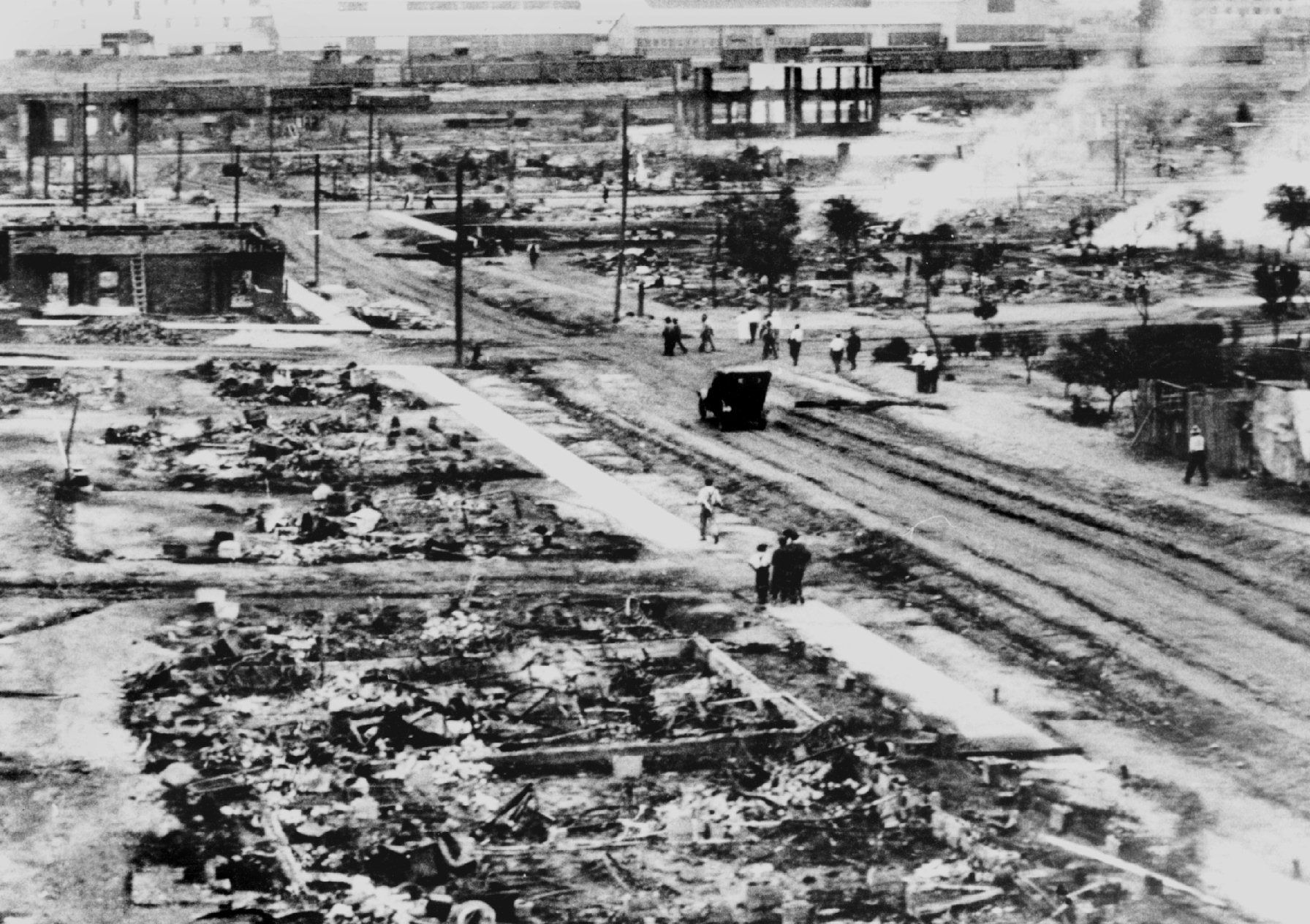
Photo: Public domain / Wikimedia Commons
Then came the second theft. No one was ever prosecuted for the massacre. An all-white grand jury blamed Black residents instead. Insurance companies refused to pay claims, hiding behind “riot” clauses in their policies. Survivors sued, and lost. Even the law called it their fault.
PART 3: THE REBUILD THEY DON’T TEACH
Here is the part of the story that belongs on a poster in every classroom: Greenwood rebuilt. First, survivors beat the city’s attempt to block them with a zoning law written to keep them out. Then, without insurance money and without justice, they rebuilt anyway. Tents became houses, houses became businesses. By 1942, a city directory counted 242 Black-owned businesses in Greenwood. More than before the massacre.
The fire destroyed buildings. It did not destroy the builders.
What finally thinned Greenwood out was quieter, and it took decades. Desegregation, progress with a price, let Black customers shop anywhere, dissolving the captive market that segregation had created. Then urban renewal drove Interstate 244 straight through the district’s heart; the highway loop was completed in 1971, over the lots of rebuilt homes and stores. Greenwood’s wealth had been concentrated in one place, brilliant and vulnerable, and policy finished what the mob started.
But the blueprint never died. It moved. And Greenwood itself is formally remembered now: the Greenwood Rising Black Wall Street History Center, the legacy project of the centennial commission, was dedicated on June 2, 2021, one hundred years after the massacre.
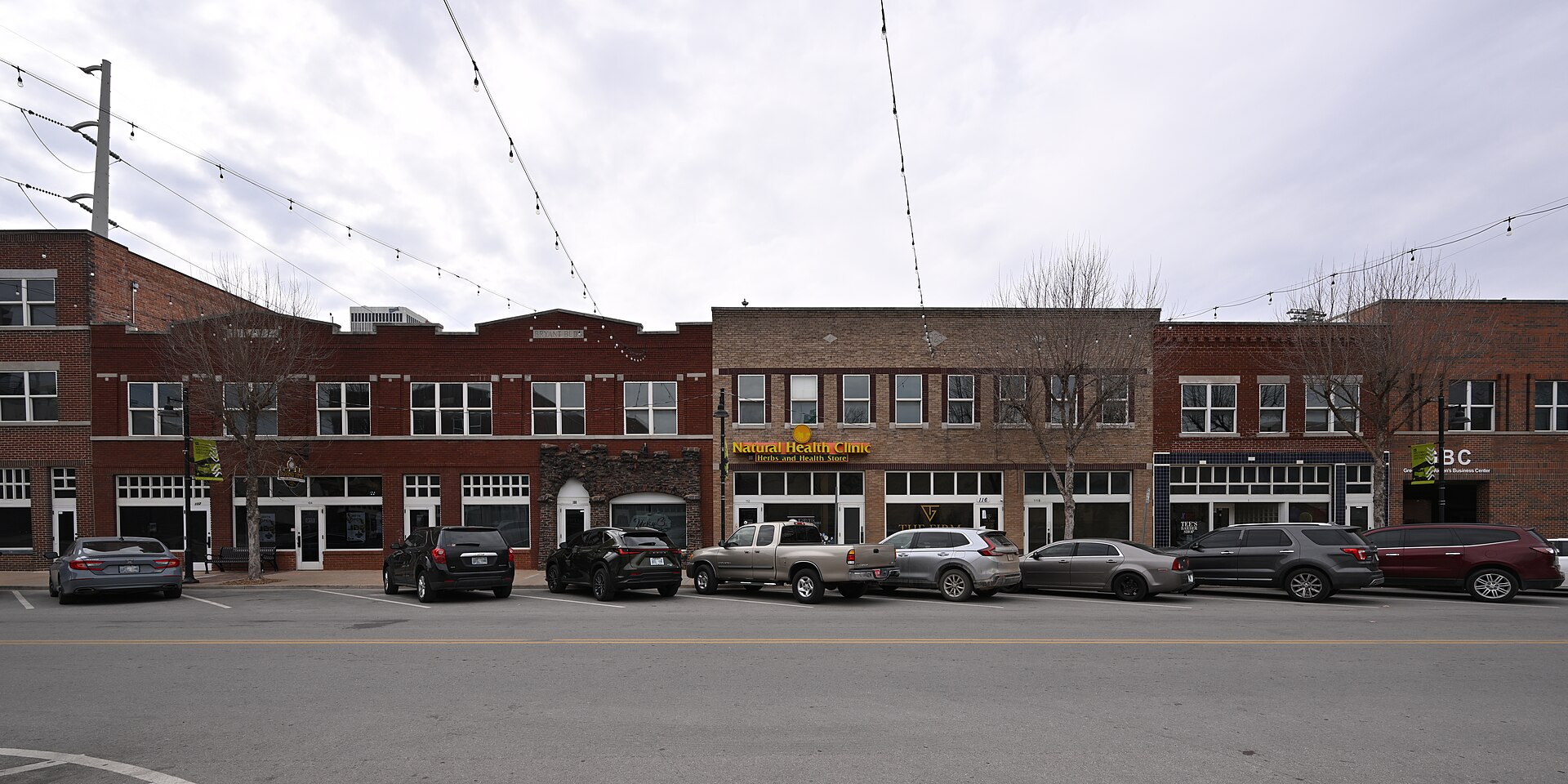
Photo: G. Edward Johnson / Wikimedia Commons (CC BY 4.0)
PART 4: WHERE THE BLUEPRINT LIVES NOW
Start in Atlanta. Today, metro Atlanta has the highest share of Black-owned businesses of any major metro in America: 10.7% of all businesses, more than three times the national share of 3.4%, ranked first for the fourth straight year in LendingTree’s analysis of Census Bureau data. Atlanta has been led by Black mayors without a break since Maynard Jackson took office in January 1974. And consider this: on August 16, 1921, eleven weeks after Greenwood burned, five Black businessmen known as the “Fervent Five” opened Citizens Trust Bank on Auburn Avenue. It is still headquartered in Atlanta today, one of the oldest and largest Black-owned banks in the country, and the first Black-owned bank admitted to the FDIC and the Federal Reserve. The same summer America burned a Black Wall Street, Black Atlanta opened a bank. That is the tradition.
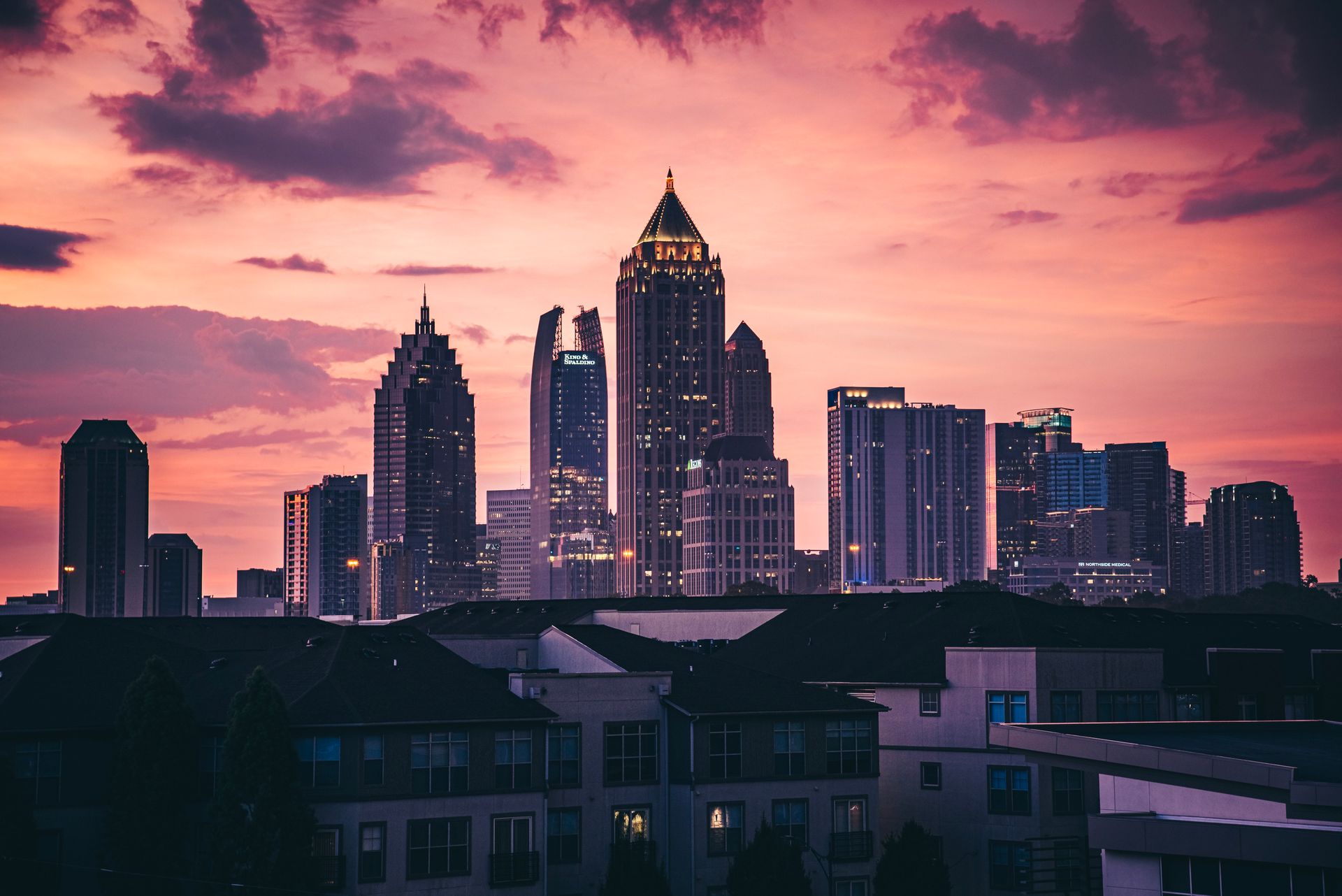
Photo: Connor Scott McManus / Pexels
Atlanta is also where Tyler Perry built Tyler Perry Studios: 330 acres he bought in 2015 on the former Fort McPherson, a U.S. Army post founded in 1885 and named for a Union general, on Atlanta ground where, during the Civil War, Confederate soldiers had once trained. A Black man who writes, directs, and produces on land he owns outright, on twelve soundstages named for Black actors. Sound familiar? It should. That is Gurley’s forty acres, scaled.
Then look at Prince George’s County, Maryland: about 61% Black, with a median household income of roughly $102,000, one of the two wealthiest majority-Black counties in America. No single street holds that wealth. It sits in home equity, in degrees, in businesses and retirement accounts spread across a whole county. Greenwood’s wealth was walled into thirty-five blocks, where one night of fire could reach all of it. Today’s Black wealth is distributed: studios in Atlanta, equity in Maryland, businesses run from laptops in every state, built so no single fire can reach it all.
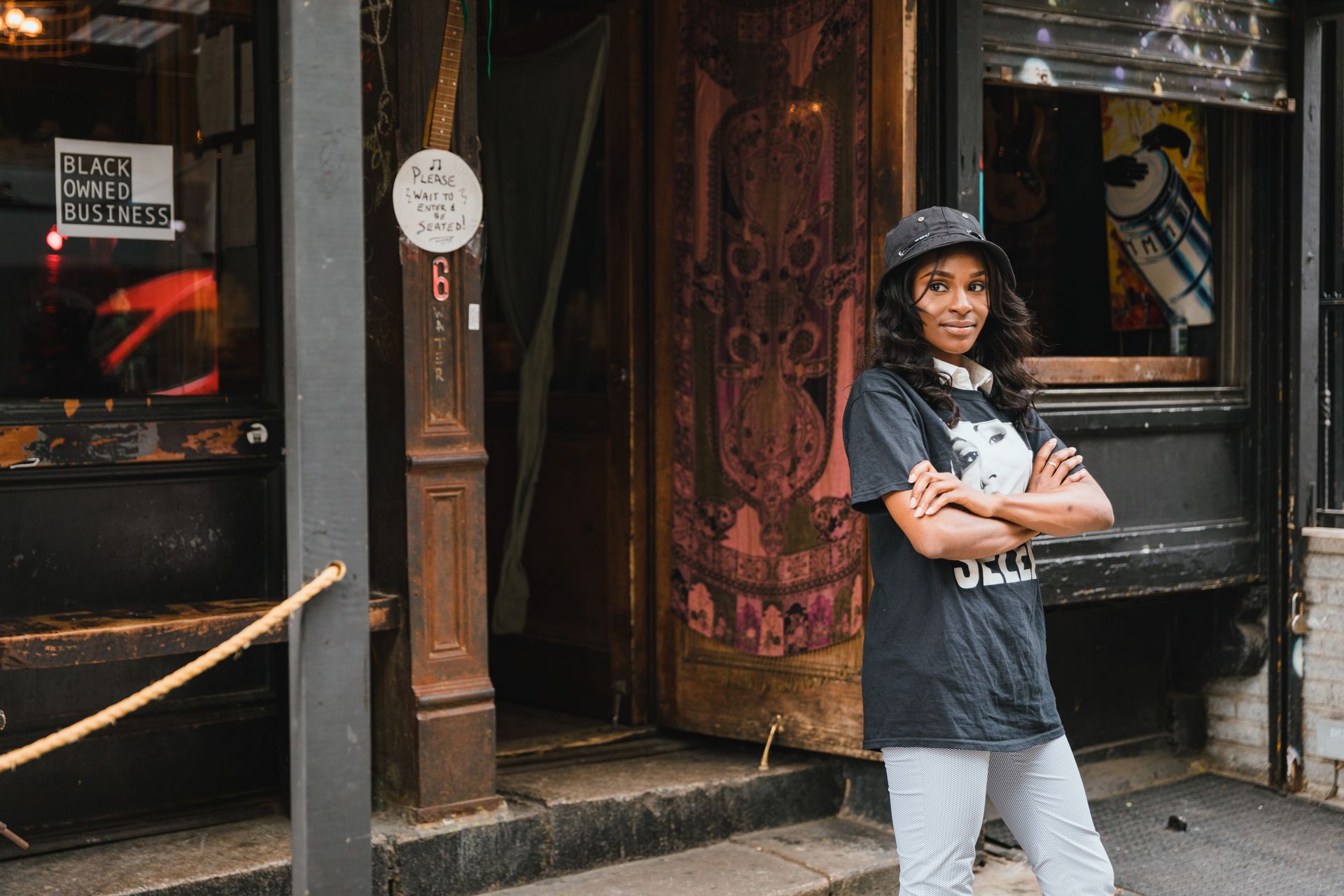
Photo: RDNE Stock project / Pexels
THE LESSON
So when we talk about buying Black, banking Black, and building Black, we are not talking about a trend. We are talking about the oldest American business tradition we have: build it ourselves, own the land under it, and pass it down on purpose.
The fire took the buildings. It never took the blueprint.
— Santana
Sources and further viewing: “Tulsa Burning: The 1921 Race Massacre” (The History Channel, 2021) and “Dreamland: The Burning of Black Wall Street” (CNN Films / SpringHill, 2021). Figures drawn from the 2001 Oklahoma Commission report, the U.S. Census Bureau, and LendingTree’s analysis of the Census Bureau’s Annual Business Survey.
Editorial & Reporting Disclaimer
The Green Social is an independent media and commentary publication, not a wire service or a court of record. News and media posts are based on publicly available information and reporting by the sources named in the post at the time of publication. Facts that could not be independently verified are identified as reported or unverified, or are omitted. Quotations are attributed to their stated sources; a quotation’s inclusion means it was reported, not that The Green Social endorses it.
Analysis and opinion in this post are the author’s own and are labelled as such; they are not statements of fact. Events, statements, and coverage may develop after publication — material updates and corrections will be noted on this post.
If you are a person or organisation discussed in this post and believe any statement is inaccurate or incomplete, or you wish to provide a response for publication, contact us through the Contact page on thegreensocial.com. Verified corrections and substantive responses are added promptly. Nothing in this post is legal, financial, or professional advice.
Educational Disclaimer: Content about investing, credit, retirement, annuities, and personal finance on The Green Social is for general education and information only. It is not financial, investment, tax, or legal advice, and it is not a recommendation to buy, sell, or hold any product or security. Everyone’s situation is different; speak with a licensed financial, tax, or legal professional about your own circumstances before making a decision.
This is an analysis and opinion piece based on the reporting cited in it. Statements of fact are sourced in the text; interpretations are the author’s.
#BlackWallStreet #BlackExcellence #BlackHistory


Leave a Reply
Want to join the discussion?Feel free to contribute!