
The Feds Just Answered the Weed Lawsuits. Here’s What Happens Sunday
Photo: Anonymous / Unverified
The government has made its move, and the clock did not stop.
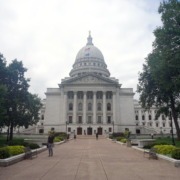
On Monday, November 23, the Department of Justice filed its response in the U.S. Court of Appeals for the D.C. Circuit, asking the court to deny the emergency stays sought by seven medical marijuana companies in Utah, Arizona, Oklahoma, and Pennsylvania. The cases are Standard Wellness Utah, LLC v. DEA, No. 26-1324, and G.P.M.II, LLC v. DEA, No. 26-1325, and they have been consolidated. TGS covered the lawsuits themselves last week. This post is only about what is new: the federal answer, and what it means for Sunday, November 29.
Start with what the government is actually arguing. According to Marijuana Moment and The Marijuana Herald, which reported on the filing, the Justice Department says the DEA’s October 30 guidance did not create a new rule at all. It only clarified registration requirements that already exist under the Controlled Substances Act. On that reading, November 29 is not a new deadline invented by the guidance. It is the end of a grace period, the point where the DEA stops holding back on supply chain rules that were already on the books.
That framing does a lot of work for the government. If the guidance is not a final agency action, the Justice Department argues, the court cannot review it the way the companies want. The filing also argues the companies lack standing, because the guidance did not change their legal obligations, and that lost revenue or a threat to a business does not amount to the kind of irreparable harm that justifies an emergency stay.
Marijuana Moment reported one comparison that tells you how the government sees this fight. In its November 24 newsletter, the outlet said the DEA compared the businesses to gas stations that want to sell opiates, and to pharmacies buying drugs from illegal labs. That is not neutral language. It is the government saying, in public, that a state license does not soften what federal registration requires.
Photo: Washarapol D BinYo Jundang / Pexels
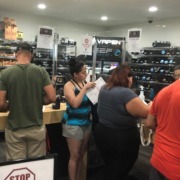
The scale here is easy to miss, so here it is. Marijuana Moment reported that a DEA declaration in the case put the number of registration applications filed in the 60-day window at about 7,100. That breaks down to roughly 4,300 dispensaries, 2,100 manufacturers, and 700 distributors. Every one of those businesses is now checking the same thing: whether every partner in its supply chain is a registrant or a timely applicant, because after November 29, trading outside that circle is the problem the guidance targets.
For the Pennsylvania companies, the problem is personal. Their dispensaries applied in time. Their grower-processor operations did not apply for manufacturer registration in the same window, and they say that means their own grows could be barred from supplying their own stores. A vertically integrated company, cut off from itself. That is the concrete version of what Sunday means if no stay arrives.
So what happens next, in order? The companies’ replies are due by 4:00 p.m. Eastern on Tuesday, November 24, before a panel that includes Judges Neomi Rao, Justin Walker, and Bradley Garcia. As of the last docket check reported on November 23, the court had not ruled, and the November 29 cutoff remained in effect. A stay could still change the timeline at any point this week. Until one issues, operators are being told by their own lawyers and trade press to plan as if Sunday is real.
Photo: Anonymous / Unverified
That is the honest bottom line. The lawsuits asked whether the DEA could do this by guidance. The government’s answer is that it did not need to, because the law already said it. The court decides who is right, and it has five days to do it.
Sources: Marijuana Moment, DEA pushback newsletter, November 24, 2026; The Marijuana Herald, DOJ filing report, November 2026; Cannabis Professional, updated coverage of the consolidated cases, November 23-24, 2026.
Editorial disclaimer: This post is news coverage based on publicly reported information. The facts above are as reported by the sources cited, and the views and analysis expressed are our own. Nothing here is legal advice.
Photos and video of the public figures featured in this post are credited to the sources named with each image. The Green Social does not claim ownership of third-party media, which remains the property of its respective owners.
#CannabisNews #MarijuanaLaw #DEA






Leave a Reply
Want to join the discussion?Feel free to contribute!